
A typical question from the managing director of a small company is brief: “We have five people in the office and two in the workshop—do we need to report anything to the public health authority?” The unexpected question in response is this: what are those two workshop employees exposed to during a normal shift, and for how long?
Work categorisation is not based on the number of employees or the industry in which a company operates. It is based on the factors affecting a specific job at a specific workplace, as well as their intensity and duration. This is why identically named positions at two companies may fall into different categories—and why copying a category from a neighbouring company’s template will not stand up to scrutiny.
The framework is set out in § 37 zákona č. 258/2000 Sb., o ochraně veřejného zdraví, ve znění pozdějších předpisů: work is divided into four categories according to the occurrence of decisive working-condition factors and the health risks they pose. The classification criteria are established by vyhláška č. 432/2003 Sb., ve znění pozdějších předpisů. For many factors, however, the actual hygiene limits and assessment methods are defined by other legislation referenced by the decree—primarily nařízení vlády č. 361/2007 Sb., kterým se stanoví podmínky ochrany zdraví při práci, and, for noise and vibration, nařízení vlády č. 272/2011 Sb.
Below, we explain what is assessed, what employers classify and report themselves, what is decided by the public health authority, what a submission must contain, and how far the result extends—to medical examinations, records, and occupational health and safety documentation.
The work is assessed, not the person or job title
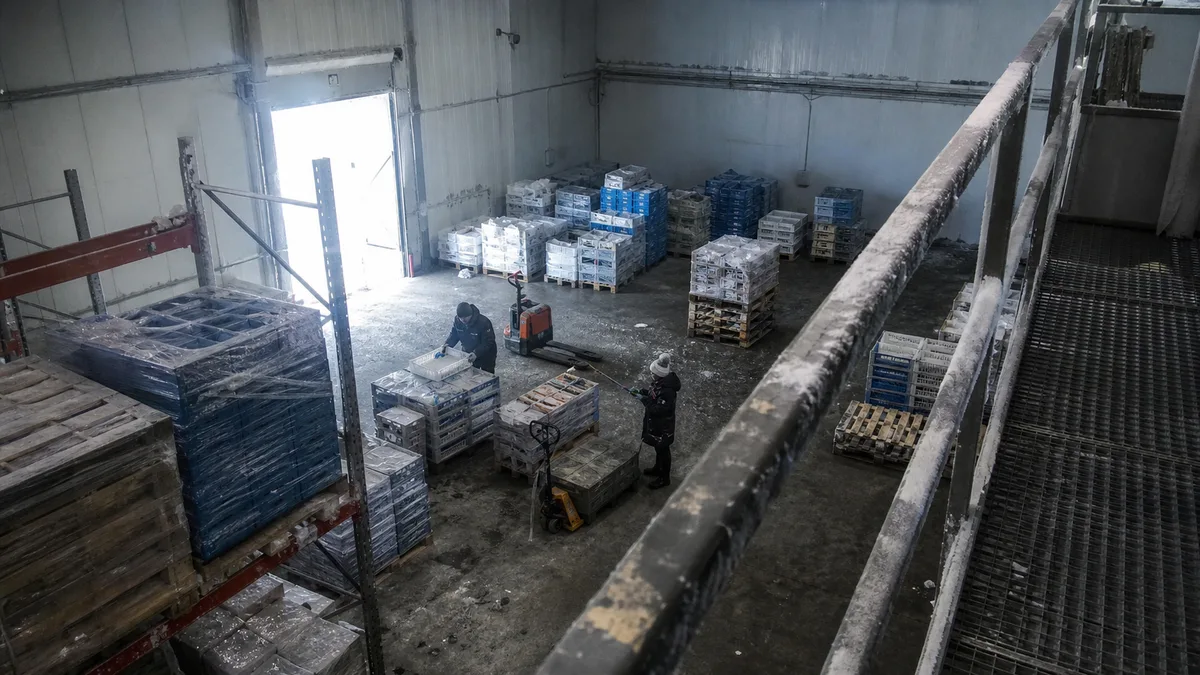
Work categorisation considers activities under the conditions in which they are actually performed. A cook at a serving facility that merely reheats meals faces different heat exposure and manual handling demands from a cook in a kitchen preparing two hundred portions from early morning. A warehouse worker using a forklift is exposed to different factors from one who manually transfers goods for most of the shift—and a worker in a freezer warehouse also faces cold exposure that neither of the others encounters.
Each decisive factor is assessed and classified separately; the overall job category is then determined by the highest-rated factor. If noise is assessed as category 2 and vibration as category 3, the job falls into category 3.
| Workplace | Factors usually assessed |
|---|---|
| office | visual strain, mental workload, working posture, work and shift patterns |
| workshop and metalworking shop | noise, hand-transmitted vibration, dust, chemical substances, working posture |
| warehouse | manual handling of loads, overall physical workload, cold exposure, noise from handling equipment |
| cleaning | chemical mixtures according to safety data sheets, physical workload, and biological agents in healthcare facilities |
| manufacturing | noise, dust, heat exposure, vibration, local muscular strain from repetitive movements |
The table is a guide, not a classification. Office work falls into category 1 in most cases, but not simply because it takes place in an office—it reaches that category only after visual and mental workload, working posture, and the duration of work with display screen equipment have been assessed.
Secondary activities are the most commonly overlooked. A metalworker who uses an angle grinder for twenty minutes twice a week. A chemical mixture stored only in the workplace storeroom and therefore absent from the list of positions. Regular manual handling of components that nobody considers the “main job.” An export of positions from an HR system will not reveal any of this. A workplace inspection and a conversation with the supervisor will.
Who is affected: company size, work agreements, and agency workers
The obligation is tied to employment and actual working conditions, not company size—it also applies to an employer with a single employee. The type of employment relationship makes no difference: work performed under a dohoda o provedení práce or dohoda o pracovní činnosti is assessed in the same way as work performed under an employment contract because the decisive elements are the activity and exposure involved.
A purely office-based company whose jobs fall into category 1 does not submit anything to the public health authority. It must nevertheless retain the assessment of working conditions as supporting documentation—during an inspection, the company must show how it arrived at category 1, and the same evidence is subsequently used in its risk assessment.
For agency workers, the decisive issue is where the work is physically performed. Under § 309 odst. 1 zákoníku práce (zákon č. 262/2006 Sb., ve znění pozdějších předpisů), the user undertaking—meaning the company at whose workplace the temporarily assigned employee works—provides the working conditions and ensures occupational health and safety. Knowledge of the relevant factors therefore rests with the user undertaking, which must pass that information to the agency because, without the category and decisive factors, the agency has nothing to include in a request for an occupational medical examination.
Categories 1 to 4: who classifies the work and what is submitted to the public health authority
| Category | Who classifies the work | What is submitted to the public health authority |
|---|---|---|
| 1 | the employer, as part of its assessment of working conditions | nothing; the supporting documentation remains with the company in case of an inspection |
| 2 | the employer | immediate notification of the classification, including information on the factors and measures adopted |
| 3 and 4 | the public health authority decides | a classification proposal, including supporting documents and reports |
| 2R | category 2 work that the public health authority has declared hazardous | it continues to be treated as hazardous work under the decision |
The employer classifies work in category 2 itself; under § 37 zákona č. 258/2000 Sb., it has 30 calendar days from the date on which the work begins, or from the date of a change in conditions justifying a different classification. The employer must then immediately notify the competent public health protection authority—in practice the relevant krajská hygienická stanice (regional public health authority)—and provide the information required by law. This is the source of a widespread misconception: the thirty-day period applies to classifying the work, not to submitting the notification. Classification is followed by a separate obligation to report it immediately, so waiting until the final day of the thirty-day period is not a postponement to which the company is entitled. Category 2 does not require prior approval, although the authority may review the classification and decide under § 39 of the same act that the work is hazardous; such category 2 work is commonly referred to as 2R.
The public health authority decides whether work belongs in category 3 or 4 on the basis of a proposal submitted by the employer within 30 calendar days of the date on which the work begins.
The submission must be sent to the authority responsible for the location of the workplace, not the company’s registered office. A company registered in Brno with a workshop in Blansko and a warehouse in Olomouc therefore deals with two krajské hygienické stanice and prepares separate supporting documentation for each workplace.
What the notification and proposal must contain
The required elements of a proposal are listed directly in § 37 zákona č. 258/2000 Sb. It must include:
- identification of the work;
- the name and location of the workplace where it is performed;
- the results of the assessment of exposure to each decisive factor during a representative shift;
- the length of the shift and, in a multi-shift operation, the shift rotation pattern;
- the proposed category;
- the number of employees performing the work, including the number of women;
- measures adopted to protect their health.
A notification of classification in category 2 is based on the same information; the proposed category is omitted because the employer has already classified the work.
The key phrase in this list is “representative shift.” The assessment must reflect normal operations—not an unusually quiet day or a one-off peak. If measurements are commissioned on a day when the press shop is shut down, the resulting figures will be unusable, and the discrepancy will be revealed during the first inspection by comparing them with production data.
This is why the assessor needs to see the workplace in operation. A categorisation prepared at a desk from a list of positions will overlook precisely the issues described above: the grinder used twice a week, chemicals from the workplace storeroom, and handling activities that nobody records.
When an expert assessment is enough and when measurements are required
This is where both the price and practical value of the result are determined. In § 38, zákon č. 258/2000 Sb. stipulates that measurements and examinations required to assess risks for classifying work in category 2, 3, or 4—and likewise for changing the classification of work in any of these categories, whether upwards or downwards—may be performed by an employer only through a holder of an accreditation certificate or authorisation (§ 83c), unless the employer itself holds the relevant qualification.
In practical terms, this has two consequences. A mobile app or an uncalibrated indicative sound-level meter cannot serve as evidence for classification; at most, it can help a company determine that professional measurements need to be commissioned. The report must be issued by an appropriately authorised party—the first page of the report will show who issued it and what it covers.
Not every factor requires measurement, however. Whether a particular factor must be measured or can be covered by an expert assessment follows from the criteria in vyhláška č. 432/2003 Sb. and the limits established by related legislation—and should be confirmed by an assessor with the appropriate authorisation. Measurements are generally unavoidable for noise, vibration, and chemical substances; for physical workload and working posture, their scope depends on the nature of the work.
The supporting documents may also be prepared by a designated employee—the employer remains responsible for their accuracy, and this does not remove the requirement for measurements reserved for an accredited or authorised person unless the employer itself holds the relevant qualification. If nobody in the company has the necessary expertise, we begin our occupational health and safety service with a workplace inspection: we review the individual jobs, shifts, machinery, and substances used before determining what must be submitted to the public health authority and what requires additional measurement.
How the assessment is carried out
A useful process begins with a workplace inspection, not a form.
- List the jobs and the activities actually performed under each of them. A single employment contract may cover several types of work.
- For each job, describe the workplace, shift pattern, duration of individual activities, machinery, materials, and chemical mixtures, including their safety data sheets.
- Identify the decisive working-condition factors.
- Assess exposure during a representative shift.
- Where an expert assessment is insufficient or measured values must be documented, commission measurements from an accredited or authorised person.
- Classify the work by individual factors and use them to determine its overall category.
- Notify the public health authority immediately of category 2 work; for categories 3 and 4, submit a proposal and wait for its decision.
What else the result affects
Work categorisation is not an isolated form to be filed away; its conclusions extend into other parts of the occupational health and safety system.
Under § 103 odst. 1 písm. b) zákoníku práce, employees must be informed of the category into which the work they perform has been classified. The category and decisive factors are then included in the request for an occupational medical examination under zákon č. 373/2011 Sb., o specifických zdravotních službách, and vyhláška č. 79/2013 Sb. The employer is responsible for the accuracy of this information—the occupational health service provider cannot infer the category from the job title.
The category also determines the frequency of periodic medical examinations under vyhláška č. 79/2013 Sb. For non-hazardous work in categories 1 and 2, examinations are carried out if requested in writing by the employer or employee (from 1 January 2026, following the amendment introduced by vyhláška č. 449/2025 Sb.). For category 1, the interval is once every 6 years and once every 4 years from the age of 50; for category 2, once every 4 years and once every 2 years from the age of 50—unless other legislation, an occupational risk, or an annex to the decree provides otherwise. The general interval for category 2R and category 3 is once every two years, and for category 4 once a year; a specific factor may alter both the scope and the interval.
Hazardous work also brings additional record-keeping obligations. Under § 40 zákona č. 258/2000 Sb., records must be kept of employees, shifts worked, and identified exposures, and retained for 10 years after exposure ends. For certain exposures, including asbestos and chemical carcinogens, the retention period is 40 years—a timeframe that makes electronic records far more practical than a binder in an archive. From 1 January 2026, the occupational health service provider may also request a copy of these records; they then become part of its documentation (§ 5 odst. 2 písm. e) vyhlášky č. 79/2013 Sb.).
The result is also reflected in the risk assessment under § 102 zákoníku práce, personal protective equipment, work procedures, and safety breaks. Work categorisation and risk assessment are not interchangeable: the former focuses on health exposure and the statutory categories assigned to it, while the latter covers a broader range of hazards, including accident risks. We explain how the latter document is compiled in our article on occupational health and safety risk assessment in a company.
There is one more connection that few people consider when classifying work: in recent years, hazardous work in categories 3 and 4 involving selected factors has also become linked to pension and contribution rules for so-called demanding occupations. Have the current rules confirmed by your payroll specialist—the main implication for work categorisation is that an incorrect classification no longer becomes apparent only during a public health inspection but also affects shift records and contributions.
What a quotation should include and what affects the price
The cost of the assessment does not depend on the number of employees but on the number of distinct jobs, workplaces, and shift patterns—and, above all, how many factors require measurement. Ten people in one office represent one type of work. Ten people in a workshop may represent five types of work with three factors requiring measurement.
A quotation should separately identify:
- the workplace inspection and preparation of documentation;
- accredited or authorised measurements, including the factors and number of measurement points;
- preparation of the notification and proposal for the public health authority;
- assistance in supplementing the supporting documents if the authority requests additional information;
- incorporation of the results into the risk assessment and occupational health service documentation;
- updates following changes in operations and their cost.
The riskiest quotation is one that is cheap because it ignores measurements entirely. If it says nothing about factors or measurement points, it assumes that only a table will be completed—and the additional measurements will then appear as extra work while the deadline is already running. We explain how external occupational health and safety pricing is generally structured in our article on outsourcing occupational health and safety and the cost of an external OZO.
When work categorisation should be reviewed
Work categorisation has no general expiry period. Instead, it must correspond to actual operations—so it can remain filed away only until those operations change. A new assessment is usually required when there is:
- new technology, new machinery, or replacement of a machine with a more powerful model;
- a change in a chemical mixture or supplier—a different safety data sheet means a different assessment;
- relocation of the workplace or reconstruction of the production hall;
- a change in shift patterns, introduction of night work, or longer shifts;
- an increase in production-line output and the associated work pace and number of repetitive movements;
- creation of a new position or reassignment of activities between employees.
A change does not affect only the submission to the public health authority. From 1 January 2026, assigning an employee to a previously unassessed hazardous factor, increasing the level of risk associated with an already assessed factor, or transferring an employee to work under different conditions constitutes grounds for an extraordinary occupational medical examination (§ 12 odst. 1 vyhlášky č. 79/2013 Sb.).
The classification criteria are established by vyhláška č. 432/2003 Sb., ve znění pozdějších předpisů—and the reference to subsequent amendments is not a formality. The same applies to the legislation referenced by the decree for individual limits. If the criteria or hygiene limits are amended, an older classification may no longer comply with the current wording even if nothing has changed within the company. The criteria were most recently amended by vyhláška č. 402/2025 Sb., effective from 1 January 2026: for mental workload, category 3 now includes work performed at night in a single-shift operation for more than 4 hours per shift; for work under increased air pressure, category 4 includes any underwater diving work regardless of depth; and the criteria for chemical substances were aligned with classification under the CLP Regulation, removing references to the former R-phrases from the decree. Companies whose classifications predate this amendment should verify that they remain correct for these factors. We maintain an overview of recent changes in our article on occupational health and safety and fire safety legislative developments for 2026.
Failure to comply with work categorisation obligations may result in a fine under zákon č. 258/2000 Sb.; the offence is handled by the public health authority, and the maximum penalty varies according to the obligation breached. There is, however, a more practical reason to comply: missing or outdated categorisation tends to come to light when a workplace accident or suspected occupational disease is investigated and the company cannot prove what the employee was exposed to or for how long.
Sources for this article
- Occupational health and safety for companies – a SOHE service.
- Occupational health and safety risk assessment in a company – the related document into which the conclusions of work categorisation are incorporated.
- Occupational health and safety documentation for a small company – the documents a company should have in place when it begins employing people.
- Occupational health and safety and fire safety legislative developments for 2026 – an overview of changes affecting this area.
- Zákon č. 258/2000 Sb. – o ochraně veřejného zdraví; § 37 work categorisation, § 38 measurements and examinations, § 39 hazardous work, § 40 records for hazardous work.
- Vyhláška č. 432/2003 Sb. – criteria and factors for classifying work into categories; it refers to other legislation for hygiene limits; current wording effective from 1 January 2026 following the amendment introduced by vyhláška č. 402/2025 Sb.
- Nařízení vlády č. 361/2007 Sb. – conditions for protecting health at work; hygiene limits and assessment methods for numerous factors, including PEL and NPK-P values for chemical substances.
- Nařízení vlády č. 272/2011 Sb. – protection of health against the adverse effects of noise and vibration; limits for noise and vibration.
- Zákon č. 262/2006 Sb. – zákoník práce; § 102 risk assessment, § 103 odst. 1 písm. b) information about the category, § 309 odst. 1 conditions for temporarily assigned employees.
- Zákon č. 373/2011 Sb. – o specifických zdravotních službách; occupational health services and medical assessment care.
- Vyhláška č. 79/2013 Sb. – o pracovnělékařských službách; the contents of a request for an examination and the intervals for periodic examinations; current wording effective from 1 January 2026 following the amendment introduced by vyhláška č. 449/2025 Sb.
This article is for informational purposes and does not constitute legal advice. The specific work categorisation arrangements must be based on actual operations, the manufacturer’s documentation, the environment in which equipment is used, and the risk assessment.
Do you need a new work categorisation assessment, or just want to verify that the existing one still reflects your current operations? We will inspect the workplace, individual jobs, shifts, and substances used, and prepare the supporting documents for the public health authority and the related occupational health and safety documentation. Send us a no-obligation enquiry or email info@sohe.cz.