
OHS training for an employee who does not speak Czech well enough must be comprehensible and verifiable. A signature on a Czech training outline does not satisfy this requirement on its own. The employer must choose an appropriate language and method of instruction, verify that the employee understands the specific work involved and ensure that safety instructions also work during an ordinary shift when no interpreter is present.
Citizenship and country of origin are not the deciding factors. A person from abroad may understand instructions in Czech perfectly well, while someone else may be able to hold an everyday conversation but not understand technical explanations. You should therefore assess comprehension in the work context, rather than judging “knowledge of Czech” from an impression formed during an interview. This article addresses the organisation of safety information, not language testing or the replacement of professional qualifications.
Where to start: tasks and instructions that cannot wait
Review the job description, risks and local procedures. Identify the information without which the employee cannot start work safely: what they may do, which areas they must not enter, when they must stop work, whom they should notify of a fault and how to call for help. The overview should also cover communication during collaborative work, movement between workplaces and emergency situations.
Section 103 of Zákon č. 262/2006 Sb., zákoník práce links information, instructions and training to the employee’s specific work and its risks; Section 103(1)(f) explicitly mentions, among others, agency workers and employees on fixed-term contracts. Section 106(1) states that employees are entitled to information about the risks associated with their work and the measures protecting them from those risks, and that “the information must be comprehensible to the employee.” A language barrier is not a reason to postpone this requirement. If a worker needs an additional qualification for a new task, training in their language does not replace it.
You should also distinguish between ordinary communication and a safety signal. The statement “come in earlier tomorrow” does not have the same consequences as an instruction to stop work because of a hazard. Emergency signals and local procedures must be agreed and understood in advance; do not assume that the worker will ask a colleague for help at a critical moment.
Which format to choose
In its guidance on OHS training for foreign workers, SÚIP concludes from Section 106(1) that if an employee does not know Czech well enough to understand the explanation adequately, the employer must arrange training and provide information in a way that is “comprehensible and verifiable” for that employee—for example, with an interpreter or translator, or in a language the employee understands sufficiently. If the employee must also use written OHS documentation, internal regulations and technological procedures at work, these must likewise be available in a language they understand so that they can consult them at any time.
Adapt the specific format to the content and the people involved. Interpreting allows questions to be clarified immediately, but it requires enough time and someone capable of conveying the technical meaning accurately. A translated document can be reused, but its content must reflect the current local procedure. A practical demonstration supports understanding of the task but cannot communicate every restriction or condition.
| Format | What it is useful for | What to verify |
|---|---|---|
| Interpreted instruction | Questions and explanations of local risks | Comprehensibility and accurate technical meaning |
| Translated procedure | Repeated use during work | Version, connection to the equipment and availability |
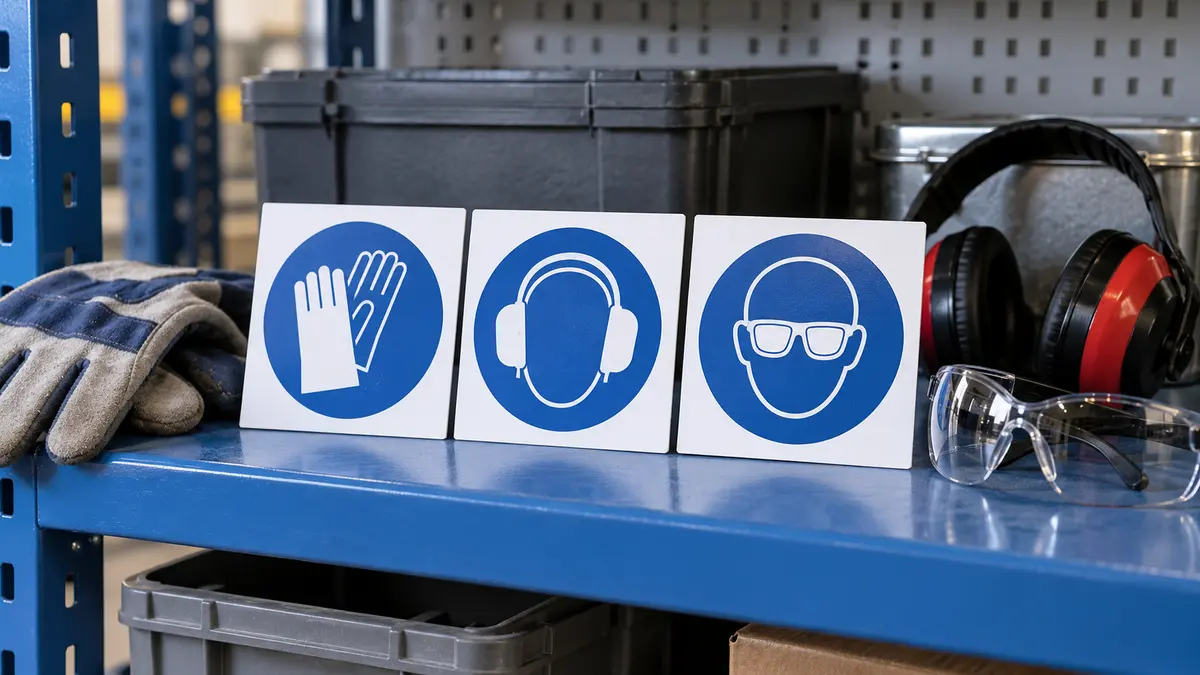
| Images and pictograms | Quick orientation | Whether the worker genuinely understands their meaning |
| Supervised practical training | Applying instructions to the task | The outcome and limits of permitted work |
| Interview or test | Checking comprehension | Whether the questions are merely a language trap |
There is no need to translate every internal sentence into every language spoken in the company. The necessary safety information must not, however, remain incomprehensible to the worker. Determine the appropriate method according to what the employee will use and the assessment of the work. A pictogram alone, for example, cannot explain who is authorised to remedy a particular fault.
Translation without loss of meaning
Correct the Czech source material before translating it. A long sentence containing three exceptions, or a procedure written for an obsolete type of equipment, will create problems in every language. Clearly identify names, specific actions, stop-work conditions and contacts. Prepare a glossary of technical terms so that the same item is not translated differently in different parts of the material.
Machine translation can be a working aid, but it is not automatic confirmation that a safety instruction is correct. Pay particular attention to negation, exceptions, direction of movement, units and component names. There is a major difference between “do not remove the guard” and a poorly translated sentence that may convey the opposite. The translation must be checked by someone capable of assessing both the language and the technical content.
Do not send employees’ personal data or non-public operational materials to an arbitrary public translation service. Use an approved information-handling method for actual company documents. This article neither recommends a specific public application nor assumes that its use is permitted within your company.
Add identification and version information to the material. If the equipment or local operating arrangements change, update the translation as well. Two different language versions of the same procedure are not two equivalent options from which the operator may choose.
Verification: ask the employee to explain the procedure
The question “do you understand?” provides little useful evidence. An employee may nod out of politeness or uncertainty. Instead, ask them to describe the situation and their decision in the agreed language: what they will do if they discover a fault, where they must not enter and whom they will contact. Where appropriate, this should be followed by safe practical training supervised by a designated person.
Do not test knowledge by simulating a dangerous fault. There is no need to damage equipment, initiate a hazardous process or expose anyone to danger. You can use a described scenario, an image or a demonstration under safe conditions. The content being assessed must correspond to the employee’s work, rather than becoming an abstract competition in translating statutory provisions.
If the worker does not pass the assessment, determine why. They may not understand a word, the procedure itself may be unclear, or they may lack a required skill. Provide additional explanation or training according to the cause and assess the outcome again. A signature must not replace an unsuccessful assessment or authorise independent work for which the worker has not met the requirements.
Example scenario: the instruction works only with an interpreter
This is a hypothetical example. A new warehouse worker completes interpreted training. They can point out the safe route and know that they must not improvise if equipment develops a fault. During the second shift, however, they do not know whom to call because the supervisor named in the training is not on duty that day.
The explanation was comprehensible, but the operational follow-up was not. The company adds a shift-specific local contact and a simple reporting method. It checks whether the employee can identify the contact and report the problem, and agrees on how they will communicate with colleagues. It does not address the situation by telling the worker to “ask someone who speaks Czech.”
An unsuccessful outcome would be discovering that the worker cannot distinguish an ordinary instruction from an immediate stop signal. In that case, the relevant collaborative task must not be assigned until the issue has been resolved. The signal must be explained again, its meaning verified and a decision made about safe work organisation. Success means comprehension that also works in day-to-day operations, not merely a completed attendance sheet.
What the shift supervisor needs to know
The supervisor needs to know which instructions have been agreed, where the correct version of the materials is available and how to communicate with the employee if something is unclear. The supervisor should not introduce new “shortcuts” that have not been explained. When the work or its conditions change, additional information and training must also be addressed; the original language version is not universally applicable throughout the employee’s entire employment.
In the same guidance, SÚIP recommends that training documentation include a record of the participants in a clearly named training session with their signatures, information about the employer, the allocated time and training outline, the place and time of the training, and details of the trainer; the outline must be up to date for the relevant type of training. The record should therefore link the content, language and format used with the trainer, date, participant and assessment. Where interpreting is used, it is practical to record how it was provided. State the actual outcome and any necessary follow-up. These employment records are not a reason to publish the employee’s personal documents.
After the first few shifts, ask about specific areas of uncertainty. This may reveal, for example, unfamiliar local terminology, a new instruction that has not been translated or a contact who is unavailable. It does not guarantee an accident-free workplace, but it is a way to identify and address weaknesses in the communication of information.
If you are considering e-learning, remember that a course presented in a language the worker does not understand proves only that they clicked through it—read more in online or in-person OHS training. Do you need to prepare training and follow-up instructions for a multilingual workplace? OHS services for businesses from SOHE can help define the content, assessment method and required materials.
Frequently asked questions
Is training in Czech always sufficient?
Only if the employee genuinely understands the necessary information. Comprehension of the safety instructions is what matters, not citizenship.
Is a court-appointed interpreter always required?
SÚIP states that legislation does not specify further professional requirements for an interpreter in this situation. The translation must nevertheless convey the necessary content accurately.
Are pictograms enough?
They can help, but they may not explain the conditions and limits of a task. Verify their meaning and the follow-up procedure with the worker.
Can I use automated translation?
It can be used as a working aid, subject to information-protection requirements, but not as unverified confirmation of accuracy. The safety and technical meaning requires human review.
What if the worker also needs an interpreter during the shift?
Provide accessible and comprehensible communication for the assigned work, fault reporting and emergency instructions. Do not rely on the occasional presence of an interpreter.
Sources and scope
- SÚIP — Školení k BOZP u cizinců
- Zákon č. 262/2006 Sb., zákoník práce — e-Sbírka: Section 103 and Section 106(1)
Sources verified on 7 October 2026. The practical procedure and example scenarios are the author’s recommendations; each workplace requires an assessment based on the equipment and documentation.