
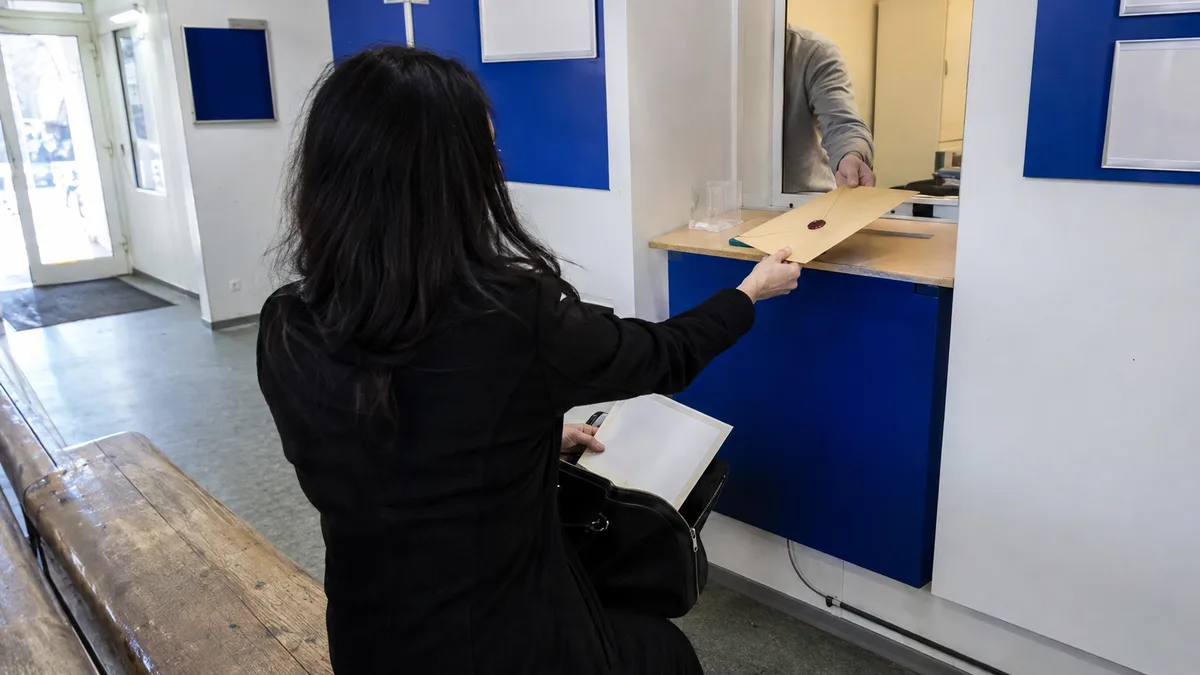
Electrician retraining courses are often sold with a single promise: “you will get your certification.” Graduates then arrive at a company with a course completion certificate and discover that the document everyone is referring to is something else entirely.
The course and the exam are two separate things, each governed by a different provision. The route to qualification from the very beginning—including the five recognised routes to education under § 2 and the differences between levels § 4 to § 8—is explained in How to Obtain Electrical Qualifications. This article focuses on retraining: where the course leads, where its validity ends, and what follows.
Quick Answer
A retraining course may lead to a vocational qualification published in the Národní soustava kvalifikací (National Register of Qualifications). This is proof of education and therefore an entry requirement. The professional competence exam for activities in electrical engineering under § 9 of NV č. 194/2022 Sb. is a separate matter and must be taken independently before a three-member examination commission. Under § 6 odst. 3, its chair must be a person professionally competent to perform inspections. A course completion certificate does not replace this exam.
Courses are still advertised as a “vyhláška 50 course.” Vyhláška č. 50/1978 Sb. has, however, been repealed. NV č. 194/2022 Sb. has been in effect since 1 July 2022 (§ 11 of the regulation) and, together with zákon č. 250/2021 Sb., forms the current framework.
Two Different Things: Qualification and Examination
The regulation distinguishes between two terms that sound almost identical, which is the source of the misunderstanding.
Odborná kvalifikace (technical qualification) under § 2 písm. a) of NV 194/2022 Sb. means education: secondary, higher vocational, or university education in field group 26 Elektrotechnika, telekomunikační a výpočetní technika; education in another field whose content meets the requirements for electrical engineering education; or a complete vocational qualification published in the Národní soustava kvalifikací under the qualification field “Elektrotechnika, telekomunikační a výpočetní technika.”
Profesní kvalifikace (vocational qualification) under § 2 písm. b) is a qualification obtained under another legal regulation. It does not include the word “complete,” and this distinction determines what the course certificate is sufficient for.
Neither of these, however, constitutes professional competence. Under § 6 odst. 1, an electrician is a person with a technical qualification who has completed training and passed an exam within the specified scope. Under § 9 odst. 1, the training and exam cover four areas: obligations arising from occupational health and safety regulations, first aid—particularly for electric shock—work and technological procedures involving sources of risk, and other matters affecting occupational and operational safety.
Practical electrical work is not among these areas. The commission does not test whether you can wire a distribution board—that is demonstrated by your qualification and experience. The exam checks whether you know what you must not do while performing the work and what to do if something nevertheless goes wrong.
When a Vocational Qualification Is Sufficient for § 6
In § 19 odst. 2 písm. a) bod 3, zákon č. 250/2021 Sb. recognises, alongside electrical engineering education, proof of successful completion of an exam for the relevant complete vocational qualification published in the Národní soustava kvalifikací under the field “Elektrotechnika, telekomunikační a výpočetní technika.” This applies both to a person qualified to work independently and to a person managing such work.
The next sentence is why it is worth reading further: for a person qualified to work independently, the same provision also permits a vocational qualification published in the NSK under the same field, based on a risk assessment for the specific activities performed by the legal entity or self-employed individual for whom those activities are carried out.
The procedure is described in § 6 odst. 7 of NV 194/2022 Sb.: based on the risks, the responsible person may determine that a vocational qualification under § 2 písm. b) can replace the technical qualification for the given type of activity and issue written confirmation using the template in příloha č. 1 of the regulation. The document must precisely specify the scope of activities, which may not exceed the activities covered by the relevant vocational qualification.
This route has three firm limits set directly by the regulation:
- Both the scope of the exam and the issued document are limited to activities involving up to 1 kV AC or up to 1.5 kV DC in premises without an explosion hazard.
- The document limits the scope of activities—it applies only to the activities listed in it by the responsible person.
- The document is valid only for activities performed for the relevant legal entity or self-employed individual. Changing employers requires a new risk assessment and a new document.
This leads to a consequence that course advertisements do not mention: this route does not work without an employer and a responsible person. Under § 2 písm. f) of the regulation, the responsible person is a person appointed by the entity operating the electrical equipment. Someone who pays for the course independently and has no entity for whom they will perform the work also has no one to carry out the risk assessment and issue the document. Self-employed individuals should therefore clarify the procedure with the operator’s responsible person in advance.
The three entry documents compared:
| Entry document | For § 6 electrician | For § 7 senior electrician | Scope restrictions |
|---|---|---|---|
| Electrical engineering education under § 2 písm. a) body 1–4 | yes | yes (+ experience under § 7 odst. 2) | none arising from the qualification |
| Complete vocational qualification from the NSK (§ 2 písm. a) bod 5) | yes | yes (+ experience under § 7 odst. 2) | none arising from the qualification |
| Vocational qualification through § 6 odst. 7 | yes, following a risk assessment and confirmation from the responsible person | no | up to 1 kV AC / 1.5 kV DC, premises without an explosion hazard, only the listed activities, and only for the specified entity |
When It Is Not Sufficient: § 7 and Work Outside the Assessed Risk
Under § 7 odst. 1 of NV 194/2022 Sb., a senior electrician may be only a person who holds a technical qualification under § 2 písm. a), meets the minimum experience requirement under § 7 odst. 2, and has completed training and passed the exam. The provision refers exclusively to písm. a). The restricted route under § 6 odst. 7, which relies on a vocational qualification under písm. b), is not sufficient for § 7. A complete vocational qualification from the NSK does, however, fall under písm. a) (bod 5). Anyone aiming beyond independent work should therefore make sure that the course provides a complete qualification.
The second boundary concerns the type of work. A document issued through the § 6 odst. 7 route covers only the activities listed in it by the responsible person. High-voltage work and premises with an explosion hazard are expressly excluded by the wording of the provision. Under § 6 odst. 6, the examination commission may also restrict the document’s scope according to the activities actually performed.
The third requirement that a course cannot provide is practical experience. Under § 19 odst. 2 písm. a) bod 4 of zákon č. 250/2021 Sb., the eligibility requirements include professional experience of a duration appropriate to the field and level of education, the degree of risk, and the activities performed. For § 6, the minimum is set by the responsible person in a local operational safety regulation, and for people without electrical engineering experience, that regulation must require supervision by a qualified person with at least two years of experience for a minimum of one year (§ 6 odst. 2 of the regulation). A course graduate therefore cannot carry out their first job alone.
What to Ask Before Paying for a Course
Five questions will determine whether the course is a useful investment:
- What exact qualification code and title will graduates obtain? The marketing name means nothing. What matters is the entry in the Národní soustava kvalifikací and whether it is a complete vocational qualification in the field “Elektrotechnika, telekomunikační a výpočetní technika” or only a partial qualification.
- What is the final exam, and what document will it produce? A certificate of course attendance and proof of passing a vocational qualification exam are two different documents. Under § 9 odst. 5 písm. a), the latter must be submitted for the § 9 exam as an original or an officially certified copy.
- Does the provider also arrange the professional competence exam under § 9, or only the course? “You will need to arrange that yourself afterwards” is a legitimate answer, but it changes both the cost calculation and the schedule.
- What activities does the qualification cover? The document issued by the responsible person under § 6 odst. 7 may not exceed the scope of activities covered by the qualification. A narrowly defined qualification therefore results in a narrowly defined document.
- Who will provide supervised experience after the course? Without an answer to this question, the document will remain unused. Supervision under § 6 odst. 2 is provided by the employer, not the school.
Course Graduates: Where to Take the § 9 Exam
Under § 19 odst. 4 of zákon č. 250/2021 Sb., professional competence exams are arranged by legal entities and self-employed individuals for those who operate and work on electrical equipment on their behalf. Self-employed individuals must arrange the exam for themselves. If the exam is provided externally, the provider’s registered business activities must include providing training and examinations or verifying knowledge.
In practice, there are therefore two routes: an employer with its own three-member commission, or an external provider with the appropriate registered business activity. The second option is used by graduates who are still looking for an employer or whose company does not have its own commission.
The same rules apply in both cases: the commission has three members and is chaired by a person professionally competent to perform inspections under § 11 of zákon č. 250/2021 Sb. (§ 6 odst. 3 of the regulation). Under § 9 odst. 4, the chair conducts and assesses the exam, prepares the record specified in příloha č. 3, and issues the document in the name of the entity with which the exam is taken. The document is valid for three years from the date of issue (§ 19 odst. 2 písm. b) of the Act). The article on the exam procedure and commission composition explains what happens on the day of the exam.
Taking the Exam with SOHE After the Course
Our exam is conducted by a three-member commission chaired by an inspection technician, as required by § 6 odst. 3 of NV 194/2022 Sb.
- Open sessions in Brno: scheduled regularly — current dates are on the Electrical training and examinations page.
- New document for a § 6 electrician or § 7 senior electrician—training, examination before the commission, and the document, indicatively CZK 2,500 per person excluding VAT; issued in person.
- Groups of graduates can be arranged with the course provider by agreement, either on the provider’s date or ours.
- Online re-examination after three years—a test and an oral interview with the commission by video call, indicatively CZK 1,400 per person excluding VAT. We arrange individual online dates for groups of at least two people.
The exact price depends on the scope of the training and the number of participants. Current figures are available in our price list, which is our single source of truth. Before registering, send us a copy of your qualification document. We will tell you whether it is sufficient for the intended scope of the exam. Details of available dates are provided on the Electrical Training and Examinations page.
Sources for This Article
- Electrical Training and Examinations – a SOHE service.
- How to Obtain Electrical Qualifications in 2026 – five routes to education under § 2 and the process from qualification and experience to the final document.
- Professional Competence in Electrical Engineering – who may perform which activities on electrical equipment and how long the respective documents remain valid.
- Professional Competence Exam in Electrical Engineering: Procedure and Commission – what happens on the day of the exam and how to identify a correctly issued document.
- Nařízení vlády č. 194/2022 Sb., as amended – on professional competence for activities involving electrical equipment; § 2 písm. a) and b) on technical and vocational qualifications, § 6 on electricians and replacing a technical qualification with a vocational qualification (odst. 7 and příloha č. 1), § 7 on senior electricians, and § 9 on training, examinations, and documents.
- Zákon č. 250/2021 Sb., as amended – on occupational safety in the operation of designated technical equipment; § 19 odst. 2 písm. a) on eligibility requirements, including vocational qualifications and risk assessments, písm. b) on the document’s three-year validity, and odst. 4 on who arranges the exam.
- Národní soustava kvalifikací – the register used to verify the code, title, and scope of the qualification offered by a course.
This article is for informational purposes and does not constitute legal advice. The specific arrangements for training, recognition of qualifications, and the scope of the exam must be determined according to the actual operation, the manufacturer’s documentation, the environment in which the equipment is used, and the risk assessment.
Have you completed retraining and now need the corresponding exam, or do you provide courses and need a commission for your graduates? Visit Electrical Training and Examinations and contact us at info@sohe.cz or through our non-binding enquiry form with details of the document and scope you require. We will get back to you with an available date and confirm whether your supporting documents are sufficient for the exam.