
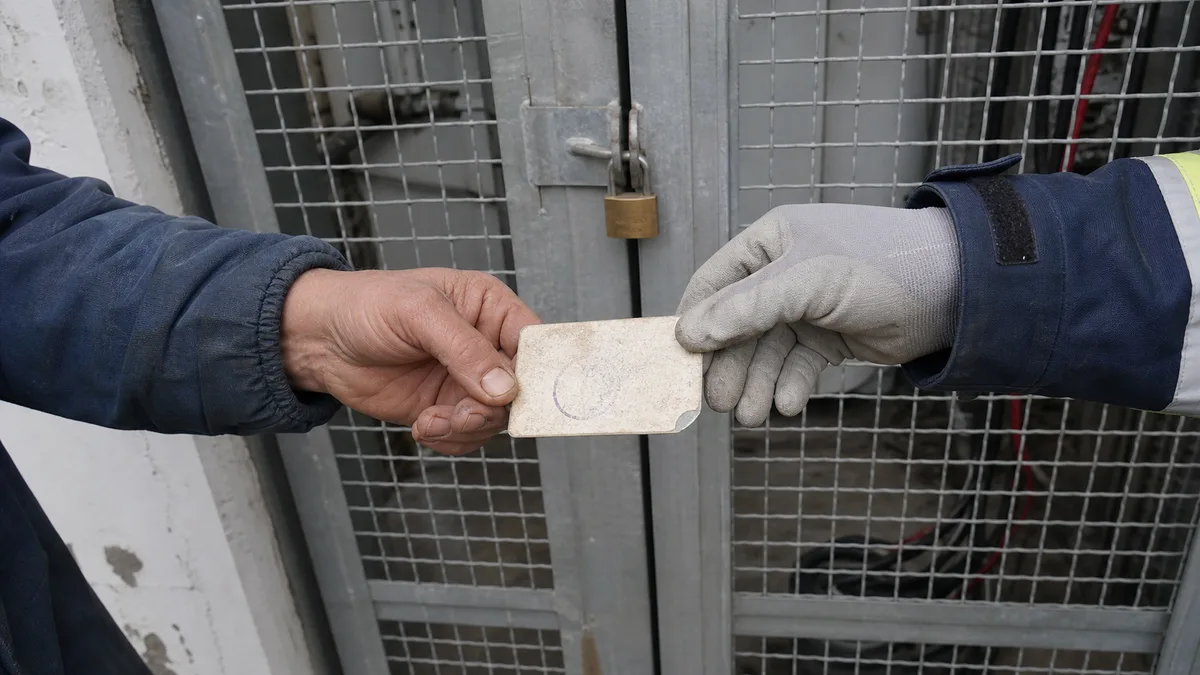
There is a card in the personnel file: “Section 6 under Vyhláška 50,” examination date 2019, a signature, and an official stamp. During a job interview or contractor selection, nobody thinks to ask the question that actually matters: what is this person allowed to do today on the strength of this document, and on what equipment?
Vyhláška č. 50/1978 Sb. was repealed on 1 July 2022 by zákon č. 250/2021 Sb. Since then, professional competence in electrical engineering has been governed by this Act together with nařízení vlády č. 194/2022 Sb.; which equipment is classified as designated equipment and which rules apply to it are addressed by nařízení vlády č. 190/2022 Sb. The old numbering has not returned—“Section 6” is now a colloquial shorthand, not proof of qualification.
For business owners, this leads to a simple rule: treat the entry “Vyhláška 50, Section 6” as information about a former qualification, not as evidence that the person is permitted to perform the work you require. We will go through a conversion table for the old levels, show how to determine the necessary qualification from the job description, explain what to compare on a certificate, and indicate where to verify both an inspection technician’s certificate and a contractor’s authorization for inspections of designated electrical equipment.
What Ended in 2022 and What Applies Instead
The new system uses two levels and three roles. An instructed person under Section 4 of nařízení vlády č. 194/2022 Sb. has a defined scope of instruction and an assigned workplace. Above that is a competent person in one of three roles: an electrician under Section 6, a senior electrician under Section 7, and an inspection technician whose certificate for inspections of designated electrical equipment is issued by Technická inspekce České republiky (TIČR) under zákon č. 250/2021 Sb.
The lowest level under the former Vyhláška—the familiarized worker under its Section 3—corresponds today to a “trained (familiarized) person”: Section 19(1) of zákon č. 250/2021 Sb. recognizes this category alongside competent and instructed persons, but requires neither an examination nor a written record under the regulation. In addition, Section 3(2) of nařízení vlády č. 194/2022 Sb. does not treat the operation of low-voltage and extra-low-voltage electrical equipment as an activity requiring professional competence. Ordinary operation of office equipment or machinery using controls intended for the user is covered by training on regulations ensuring BOZP, which employers must provide under Section 103(2) of zákoník práce, together with the manufacturer’s instructions. Whether a particular activity involving specific equipment requires more depends on the risk assessment and the local operational safety rules, not on a section number.
The second change matters more than the renumbering: qualifications are assessed against the activity, voltage, type of equipment, and degree of independence involved. The distinction between working on dead equipment, working in the vicinity of live equipment, and working on live equipment comes from ČSN EN 50110-1 and is today used expressly by Section 19(1) of zákon č. 250/2021 Sb.—and this distinction is often completely unclear on old certificates.
Converting the Old Sections to Today’s Qualifications
This table is intended as a guide when reviewing old personnel files, contracts, and quotations. It is not authorization to perform work and does not replace an assessment of the specific activity.
| Vyhláška č. 50/1978 Sb. | Closest equivalent today | What to check |
|---|---|---|
| Section 3 – familiarized worker | trained (familiarized) person under Section 19(1) of zákon č. 250/2021 Sb. | No examination and no written record under the regulation. Operation is covered by training under Section 103(2) of zákoník práce, the manufacturer’s instructions, and a risk assessment. |
| Section 4 – instructed worker | instructed person under Section 4 of NV č. 194/2022 Sb. | A written record of the instruction and knowledge verification is mandatory under Section 4(3) of the regulation, but it is not sufficient on its own—what matters is the scope of instruction and the assigned workplace it must state. |
| Section 5 – competent worker | electrician under Section 6 of NV č. 194/2022 Sb. | The correspondence is set out in the transitional provision of Section 10 of the regulation; the validity of the certificate, however, follows Section 19(2)(b) of the Act—three years from the date of issue. |
| Section 6 – worker qualified for independent work | electrician under Section 6 of NV č. 194/2022 Sb. | The person may work independently only within the scope of the current certificate and the employer’s instructions. |
| Section 7 – worker qualified to manage activities | senior electrician under Section 7 of NV č. 194/2022 Sb. | The person’s practical experience and the type of equipment must also correspond to the work, not just the name of the qualification level. |
| Section 8 – management of contractor activities or operations | senior electrician under Section 7 of NV č. 194/2022 Sb. | The former Sections 7 and 8 now converge into a single category. |
| Section 9 – worker qualified to perform inspections | inspection technician with a valid certificate under zákon č. 250/2021 Sb. | The certificate applies to inspections of designated electrical equipment. When such an inspection is provided commercially, the authorization of the company or self-employed person must also be checked alongside the technician’s credentials. |
| Section 10 – independent design and management of design work | generally a senior electrician under Section 7 | Documentation for selected activities in construction may also require authorization under zákon č. 360/1992 Sb. |
| Section 11 – qualification in special cases | no single common replacement | The specific activity and equipment must be assessed, not the former classification. |
Even in the two cases where the roles correspond approximately (former Sections 5 and 6 → electrician under Section 6; former Sections 7 and 8 → senior electrician under Section 7), this is not a mechanical conversion of the certificate. Section 10 of the regulation formally recognizes old certificates as evidence of professional competence, but that recognition changes neither the three-year validity under Section 19(2)(b) of the Act nor the scope of the certificate, so an old document by itself does not establish current professional competence in 2026—the certificate’s validity, scope, education requirements, practical experience, and current examination must always be checked. For all other rows, the actual work must be compared. We explain what the current route to certification looks like in a separate article on obtaining electrical qualifications; here, the focus is on checking people and contractors who already work for your company.
Start with the Job Description, Not the Section Number
The question “Which section are they qualified under?” comes second. The first question is what the person is supposed to do, on what equipment, at what voltage, and whether they work independently.
| Task within the company | What it typically requires |
|---|---|
| Using a laptop, printer, or machine via controls intended for the operator | The manufacturer’s instructions, BOZP training under Section 103(2) of zákoník práce, and equipment in safe condition. An electrical qualification is required only if indicated by the risk assessment or local operational safety rules. |
| A defined activity performed according to instructions, typically on dead equipment | An instructed person under Section 4 of NV č. 194/2022 Sb., provided that the activity is covered by the scope of instruction and the assigned workplace. |
| Replacing a light fitting, repairing a socket circuit, or working inside a switchboard | An electrician under Section 6 of NV č. 194/2022 Sb. with the appropriate scope. |
| Managing electricians, managing operations, or designing without professional authorization | A senior electrician under Section 7 of NV č. 194/2022 Sb.; documentation for selected activities in construction also requires authorization under zákon č. 360/1992 Sb. |
| Initial or periodic inspection of designated electrical equipment | An inspection technician with a valid certificate covering the relevant scope; if the inspection is provided commercially, the company or self-employed person must also hold the appropriate authorization. |
| Checking or inspecting electrical appliances and tools during use | This depends on the specific equipment and activity performed. For appliances that are not designated electrical equipment, neither an inspection technician’s certificate nor TIČR authorization is prescribed; the person needs professional competence appropriate to the activity and must follow ČSN 33 1600 ed. 2 and the manufacturer’s instructions. |
An instructed person is therefore not simply a cheaper electrician. A record limited to operating one machine does not authorize the person to replace a socket or work inside a switchboard—even if they have “worked with electricity for twenty years.” We explain what such a record must contain in our article on who qualifies as an instructed person in a company.
The boundary for electrical appliances and tools differs from that for fixed electrical installations. Not every portable appliance is designated electrical equipment under nařízení vlády č. 190/2022 Sb.; where it is not, neither an inspection technician’s certificate nor TIČR authorization is required. The type of equipment and the activity performed are decisive: checking an appliance is different from inspecting it, and each requires different professional competence. The scope of the tasks, the intervals, and who may perform them are governed by ČSN 33 1600 ed. 2 and the manufacturer’s instructions. We discuss whether you can handle these tasks using your own employees in the article Can We Inspect Electrical Appliances Ourselves?.
How to Tell Whether a Certificate Matches the Work
The heading on a certificate is the least informative part of the document. A competent person’s certificate should state the qualification level achieved, the examination date, and the scope: voltage, type of equipment, and any restrictions on the activities permitted. The scope of inspection technicians’ certificates has traditionally been recorded using codes such as E1A or E2B, but these must be read component by component rather than as a single unit:
- the number after E specifies the voltage range: E1 means electrical equipment without a voltage limit, while E2 means equipment up to 1,000 V;
- the letter specifies the environment: A means premises without an explosion hazard, while B means premises with an explosion hazard;
- protection against the effects of atmospheric and static electricity, including lightning protection systems, forms a separate scope designated E3—it cannot be inferred from either an E1A or E2B code.
The code is only shorthand. The decisive information is the written definition of the scope stated on the certificate, so always read the entire document, even when the code looks familiar.
The scope is often the weak point. Disputes do not usually arise because a certificate is missing, but because the certificate does not cover the equipment concerned: a certificate for equipment up to 1,000 V in premises without an explosion hazard does not cover an inspection in a paint shop, at a privately operated transformer station, or on a lightning protection system. The class to which your equipment belongs is determined by nařízení vlády č. 190/2022 Sb.—and that also determines whether certificates and authorizations are relevant at all.
When engaging an external contractor to inspect designated electrical equipment, compare three things, not one:
- the validity of the certificate held by the individual who will sign the inspection report;
- the scope of that certificate against the equipment to be inspected;
- the authorization held by the legal entity or self-employed person, because the inspection of designated equipment is being provided commercially.
Both certificates and authorizations are issued and recorded by TIČR, so there is an official register against which the document number can be checked. The appearance of the stamp says nothing about validity. When commissioning an external inspection of designated equipment, request the scope of both the certificate and the authorization before signing the contract. For inspections of electrical appliances and tools, where these documents may not be required, ask instead for proof of the professional competence of the person who will perform the work and a precise list of the tasks covered by the quotation—we are happy to provide both without being asked, including a clear statement of what falls outside the scope.
Dates on Certificates: What Is Already Out of Date in 2026
Under Section 19(2)(b) of zákon č. 250/2021 Sb., a certificate of professional competence for both an electrician and a senior electrician is valid for three years from the date of issue. Any card issued before 1 July 2022 is therefore at least four years old today—beyond the three-year validity period, regardless of how it was originally labelled. Renaming an old qualification level as “electrician” does not change this arithmetic; we describe the renewal process in our article on renewing and retaking electrical competence examinations.
Two other documents have different validity periods and are easily confused:
- an inspection technician’s certificate is issued for five years under zákon č. 250/2021 Sb. and belongs to one specific individual;
- an authorization to install, repair, inspect, and test designated technical equipment is issued for ten years and belongs to a company or self-employed person.
Certificates issued before zákon č. 250/2021 Sb. took effect remain valid under Section 24(1) for the period for which they were issued, with no additional time limit. Authorizations are different: under Section 24(2), those issued by the Institute of Technical Inspection Prague expired no later than 1 July 2025, and those issued by TIČR remain valid until 1 July 2027 at the latest. In 2026, the date on the document is therefore not a formality: compare it with the TIČR register, not with the contractor’s recollection.
One final distinction causes more audit failures than almost anything else: training is not an examination. Under Section 103(3) of zákoník práce, the employer determines the content, frequency, method of verifying knowledge, and documentation of training through its own internal rules—regular training therefore cannot replace a missing certificate of professional competence, and vice versa.
What to Do This Week
Review job descriptions, service contracts, and training records, and replace every reference to “Sections 5 to 10 of Vyhláška 50” with a description of the actual activity and the required scope. The following process can be completed in an afternoon:
- List who merely operates the equipment, who works on it, and who manages the work.
- For each activity, record the equipment, voltage, environment, and degree of independence.
- Check the examination date, scope, and stated restrictions on every certificate—and, for instructed persons, the assigned workplace as well.
- For inspections of designated electrical equipment, verify the technician and the contractor separately in the TIČR register; for appliances and tools that are not designated equipment, verify instead the professional competence of the person who will perform the check or inspection.
- Put examination and training deadlines in a calendar, not in one colleague’s memory.
When comparing offers for training and examinations, compare the content rather than package names such as “Vyhláška 50”—nařízení vlády č. 194/2022 Sb. specifies neither a price nor a package format, so two equally priced offers may cover entirely different services. If your files contain only old section numbers with no clear scope, it makes sense to begin with an audit of certificates and activities. Only then will you know who needs to retake an examination, who merely needs additional instruction, and where a senior electrician or inspection technician is required. If you would rather not handle this alone, we will review it with you and provide the results as a list complete with deadlines.
Sources for This Article
- Inspections of electrical appliances and tools – a SOHE service.
- How to obtain electrical qualifications – what is currently involved in obtaining an electrician’s or senior electrician’s certificate.
- Renewal and re-examination of electrical competence – when a certificate expires and how to schedule deadlines in advance.
- Electrical safety training in a company: who is an instructed person? – what a record of instruction must contain and what it permits the person to do.
- Zákon č. 250/2021 Sb. – occupational safety in connection with the operation of designated technical equipment; it repealed vyhláška č. 50/1978 Sb. and governs certificates and authorizations.
- Nařízení vlády č. 194/2022 Sb. – requirements for professional competence in electrical engineering: instructed person (Section 4), electrician (Section 6), and senior electrician (Section 7).
- Nařízení vlády č. 190/2022 Sb. – designated electrical equipment and requirements for ensuring its safety; it determines which equipment is classified as designated and which is not.
- Zákon č. 262/2006 Sb. – zákoník práce; Section 103(2) and (3) concern training on regulations ensuring BOZP and its documentation.
- Zákon č. 360/1992 Sb. – authorization in construction, which may apply to the design of electrical equipment.
- Vyhláška č. 50/1978 Sb. – repealed on 1 July 2022; its historical text now serves only to identify the former qualification levels.
- ČSN EN 50110-1 – operation of and work on electrical installations; it distinguishes dead working, live working, and working in the vicinity of live parts.
- ČSN 33 1600 ed. 2 – inspections and checks of electrical appliances during use; it distinguishes checks from inspections and ties the intervals to the appliance category.
This article is for information purposes and does not constitute legal advice. The specific arrangements for professional competence, training, and inspections must be based on the actual operation, the manufacturer’s documentation, the environment in which the equipment is used, and the risk assessment.
Not sure whether the certificates in your files match the work your employees actually perform? We will review the activities, certificates, and scopes with you and identify what is missing—for inspections of electrical appliances and tools, we can also provide a date and record-keeping. Email info@sohe.cz or send us a no-obligation enquiry.
Exam dates for § 6 and § 7: open sessions in Brno are scheduled regularly, repeat examination online for CZK 1,400 per person — details on Electrical training and examinations.