
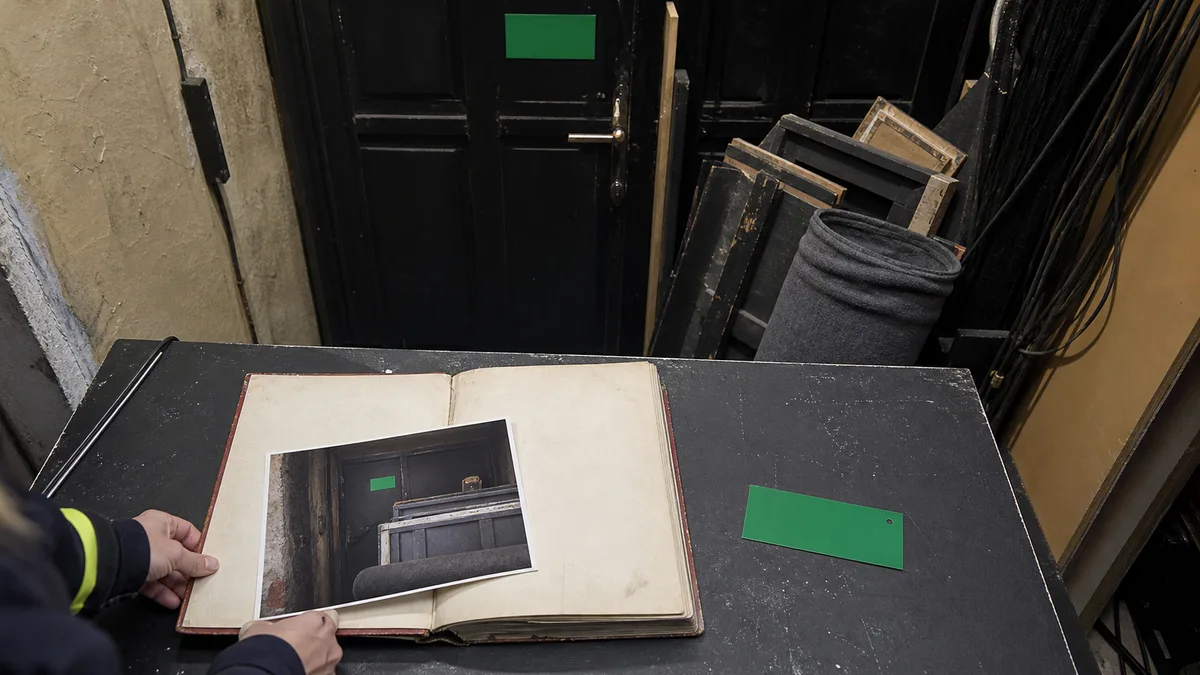
There is room for one more pallet in the warehouse if the boxes are placed in the passage leading to the north exit. Nobody planned it; it simply happened one day—and stayed that way. Meanwhile, a binder contains three signed pages stating, “inspection completed, no defects found.” One for each of the past three years.
A preventive fire safety inspection is the one regular occasion when someone deliberately looks for this discrepancy between the paperwork and the actual premises. It is not a visit from the fire service, nor is it a box-ticking exercise. It is the operator’s own inspection, verifying whether the workplace’s actual condition complies with the regulations and its fire safety documentation and whether defects identified during the previous inspection have been rectified.
We will cover the four points that matter most to companies: how to determine whether inspections are required and how often, who may perform them, what must actually be checked, and what a record should look like if it is to provide meaningful evidence eighteen months later.
Whether inspections are required does not depend on your industry
The decisive factor is the classification of the activities carried out under § 4 zákona č. 133/1985 Sb., o požární ochraně. The Act defines three categories:
- activities without an increased fire hazard;
- activities with an increased fire hazard;
- activities with a high fire hazard.
For activities with an increased or high fire hazard, inspections are carried out in the affected buildings and facilities. For activities without an increased fire hazard, the obligation under § 12 vyhlášky č. 246/2001 Sb., o požární prevenci applies in areas where at least three people in an employment or comparable working relationship are regularly present at the same time—and also in areas freely accessible to the public.
The second half of that sentence is the part most often overlooked. The threshold of three people is based on employees, not customers: a shop, medical practice, or other premises open to the public may be subject to inspections even with only two people working each shift.
The category of an activity cannot be determined from the name of the industry. Relevant factors include the type and quantity of flammable substances and gases present in one place, the generation of combustible dust, work involving open flames, fire load, and building parameters. Section 4(2) and (3) provides specific thresholds, including criteria based on the number of above-ground floors and the building’s height. If you do not know which category applies to you, do not start by calculating the deadline—start with the classification. This also determines which fire safety documentation the company must maintain, as explained in our article on fire safety documentation.
Inspection intervals: three months, six months, one year—and when inspections must be more frequent
The intervals are set out in § 13 vyhlášky č. 246/2001 Sb.
| Classification of the activity carried out | Maximum standard interval |
|---|---|
| High fire hazard | at least once every 3 months |
| Increased fire hazard | at least once every 6 months |
| Without an increased fire hazard (in areas covered by § 12 vyhlášky) | at least once a year |
The words “at least” are there for a reason. These are the longest permissible intervals, not recommended dates. An approved fire hazard assessment or the fire safety documentation may shorten the interval under § 13 odst. 2—in which case the shorter interval applies.
A company template that sets the same annual inspection date for every branch is suitable only if none of them is subject to a shorter interval—in other words, if all activities are classified as having no increased fire hazard and the documentation does not shorten the interval anywhere. Merely having the same category at every branch does not justify an annual inspection: if all branches carry out activities with an increased fire hazard, a one-year interval conflicts with the maximum six-month interval. A single interval for the entire company must therefore reflect the shortest interval applicable to any of the included operations. For a manufacturing company with a production hall, a paint shop, and an office in another city, this almost always means setting deadlines separately for each site rather than applying one interval to all of them.
Who may perform the inspection
Section 5(1)(e) zákona č. 133/1985 Sb. requires regular checks of compliance with fire safety regulations and the immediate rectification of identified defects. It identifies three roles authorised to perform these checks:
- odborně způsobilá osoba v požární ochraně (OZO);
- technik požární ochrany (TPO);
- preventista požární ochrany who has completed professional training under § 16 of the same Act.
Completing employee fire safety training does not make someone a preventista požární ochrany—these are two different things, covered in our separate article on fire safety training. Nor is a preventista požární ochrany the same as a member of a preventivní požární hlídka; the latter has a different role and acts under different circumstances.
A company director may sign off on the inspection only if they personally meet the requirements for one of these three roles. When using an external provider, ask for their OZO or TPO certificate number. For an in-house preventista požární ochrany, retain evidence of the scope and date of their latest professional training. Under vyhláška č. 246/2001 Sb., this training must be repeated and must cover the specific workplace, the method and intervals of inspections, and the maintenance of the fire safety log.
What an external provider’s signature does not transfer is statutory responsibility. Under § 2 zákona č. 133/1985 Sb., the statutory body of a legal entity is responsible for fulfilling its fire safety obligations. The provider bears contractual responsibility for its service, but the company cannot transfer its statutory duty simply by paying an invoice.
What must actually be checked during the inspection
Reviewing a binder is not an inspection. Vyhláška covers both the actual condition and the records, so the physical walkthrough should include, in particular:
- escape routes and emergency exits—the required clear width, functional panic hardware, and signage; an exit “locked to prevent theft” is a classic finding;
- unobstructed access to fire extinguishers, hydrants, switchboards, main energy shut-off points, and manual controls for fire safety systems—a shelving unit placed in front of a switchboard is harder to move than a piece of paper;
- fire doors and closures: proper closing, intact seals, and no wedges; if operations require doors to remain normally open, use electromagnetic hold-open devices connected to the EPS, not a block of wood;
- cable and pipe penetrations through fire-separating structures—after every data network rerouting or installation of a new partition, ask how the penetration seal was restored;
- storage of flammable materials and gas cylinders, separation of materials from heat sources, and the use of incorrect or substituted containers;
- electrical findings visible during normal operations: damaged power leads, daisy-chained extension cables, a cable reel left wound while under load, and battery-powered tools or vehicles being charged in an escape corridor;
- mandatory signage, požární poplachové směrnice, and other documents displayed at the workplace;
- the validity of records for inspections of fire extinguishers, hydrants, emergency lighting, EPS, and other installed systems;
- completion of every measure from the previous inspection, checked item by item.
Then comes the question on which the entire value of the inspection depends: what has changed since the last one? A new partition dividing a fire compartment. Cardboard stored in an area that was previously kept clear. Photovoltaic panels on the roof and the access route to them. Battery storage. Company vehicles being charged against the wall of the production hall. New technology. Any of these changes may mean that the fire safety documentation describes a building that no longer exists in that form—and another entry in the fire safety log will not fix that discrepancy by itself.
Setting deadlines based on the activity classification, inspecting the premises, and flagging discrepancies between the documentation and reality is exactly what we do for companies. We take responsibility for their fire safety, including regular preventive inspections and deadline tracking.
What the inspection does not replace
A single visit may combine several tasks. The resulting records, however, are not interchangeable.
| Task | What it covers |
|---|---|
| Preventive fire safety inspection | the overall fire safety condition of the workplace, records, defects, and their rectification |
| Operational check of a fire extinguisher | the specific extinguisher and its fitness for use (§ 9 vyhlášky č. 246/2001 Sb.) |
| Inspection of fire safety equipment | EPS, emergency lighting, fire closures, and smoke and heat extraction systems (§ 7 vyhlášky č. 246/2001 Sb.) |
| Electrical installation inspection | the technical condition of electrical equipment within the scope of the relevant inspection |
| HZS inspection | external state fire supervision under § 31 zákona č. 133/1985 Sb. |
During the inspection, the preventista may discover that an extinguisher does not have a valid inspection record or that a fire door does not close properly. This does not mean that they have performed the required specialist operational check of that equipment. The latter requires the appropriate qualifications and a separate record. This is explained in detail in our article on fire extinguisher inspections.
A record that still proves something two years later
Under § 12 vyhlášky č. 246/2001 Sb., the inspection must be entered in the fire safety log or recorded in another demonstrable manner. A paper log is therefore not the only permissible format, but the chosen method must contain all required details and remain traceable. The record must be created immediately after the inspection and must include:
- the date of the inspection;
- the exact identification of the building and workplace inspected;
- the facts identified;
- the measures proposed;
- the method and deadlines for their completion;
- the name and signature of the person who made the record;
- the name and signature of the workplace manager or another designated person;
- a subsequent record confirming completion of the measures.
The fire safety log is not used solely for inspections. It also records other significant fire safety matters, such as employee training, professional training of preventivní požární hlídky and preventisté, fires, and fire drills. It is an ongoing operational record, not a single-use form.
The statement “inspection completed, everything in order” satisfies roughly two of the eight requirements. A useful entry looks different: for every defect, it clearly identifies the location, nature of the problem, and remedy:
Warehouse, passage to the north emergency exit—the passage is narrowed to approximately 60 cm by stored boxes. Measure: move the material to shelving row C and maintain the clear width specified in the documentation. Responsible person: [name]. Deadline: [date]. Completion verified on: [date, signature].
The difference between these two records only becomes apparent when someone asks questions later—during an inspection, after an insured event, or in a dispute over who knew about the defect.
How to recognise a properly performed inspection
A good provider will want to know in advance how many sites you have and what types they are, how the activities are classified, and what documentation exists. On site, they will inspect the entire agreed scope, including warehouses, technical rooms, and shared areas—not merely the office and a pre-printed page.
The resulting report should identify the precise location of defects, deadlines, the required remedy, and the status of earlier measures. Photographs are not mandatory, but in a larger building they can prevent disputes over which door or penetration the entry referred to. Be wary of a single generic record used for several branches: each building has different activities, equipment, and responsible persons.
The price depends on the number of workplaces, the size and complexity of the warehouse or production operation, the classification of the activities, the condition of the existing documentation, and travel costs. Before placing an order, confirm what the price includes: a walkthrough of the entire building, review of records, preparation of the inspection entry, discussion of defects, and subsequent verification that they have been rectified. Our separate article explains how the cost of outsourced fire safety services and training is calculated.
What to prepare before the visit
Prepare the most recent inspection record, evidence of the classification of the activities, the fire safety log, and the available equipment inspection records. Above all, arrange for someone who understands the operation and can provide access to the warehouse, technical room, and roof—without keys, the inspection will be reduced to the corridor.
In rented premises, review the lease agreement in advance. Under § 2 zákona č. 133/1985 Sb., fire safety obligations in areas shared by several parties are fulfilled by the owner of those areas unless the parties have agreed otherwise. The agreement therefore determines who is responsible for the escape corridor, hydrant, and electrical distribution room. For more information, see our article on landlords’ obligations.
Sources for this article
- Fire safety for companies – a service provided by SOHE.
- Fire safety documentation: when it is required and who may prepare it – classification of activities and the documents on which the inspection is based.
- Fire extinguisher inspections in companies: intervals and records – a separate task that the preventive inspection does not replace.
- HZS inspections in companies: what state fire supervision checks – the records state fire supervision will examine first.
- Zákon č. 133/1985 Sb. – o požární ochraně; classification of activities (§ 4), the obligation to perform regular checks and who may conduct them (§ 5), responsibility and shared areas (§ 2), professional training (§ 16), and state fire supervision (§ 31).
- Vyhláška č. 246/2001 Sb. – o požární prevenci; preventive fire safety inspections and their records (§ 12), inspection intervals (§ 13), inspections of fire safety equipment (§ 7), and fire extinguishers (§ 9).
This article is for informational purposes and does not constitute legal advice. The specific preventive fire safety inspection regime must be determined according to the actual operation, the classification of the activities carried out, the manufacturer’s documentation for installed equipment, the operating environment, and the risk assessment.
Not sure whether your premises require annual, six-monthly, or quarterly inspections? We will review your activity classification with you, set the deadlines, and take care of your fire safety, including inspections, records, and deadline tracking. Request a no-obligation quote or email info@sohe.cz—just tell us the number of sites and briefly describe your operations.